
Trace a Centreville Street by Address
A street-by-street search in Centreville starts with the precise site, not a person’s name. Fairfax County keeps the current property layer at the parcel level. That makes the parcel number, subdivision, lot or block, and legal description useful handoffs when the visible address is incomplete or changes form. Centreville is an unincorporated Fairfax County census-designated place, so county offices, rather than a Centreville city assessor or clerk, maintain the record trail. Ownership is often documented; ordinary presence at an address is not.
- Check the address in the Master Address Repository, known as MAR, or Jade to confirm the street spelling, direction, suffix, address range, and parcel relationship.
- Run the address in Fairfax iCare. For a broader Centreville street search, leave the number blank and use a wildcard street query when appropriate.
- Open the same road in Jade, turn on the parcel layer, and record each selected parcel’s tax-map reference and legal-description clues.
- Use the current owner as a grantee search in the Fairfax Circuit Court land-record index, then read the deed for its grantor and prior-book reference.
- For a historic Centreville address, ask the Virginia Room for an address-first criss-cross or telephone directory by locality and exact year. A voter lookup is personal or statutory-list access, not a public street browser.
That order keeps a Centreville by-address search from treating one record as a household list. The address validates the Centreville place, iCare supplies the Centreville property context, the deed proves a Centreville transfer, and a dated directory can offer a separate historical lead. Note: Save the portal’s data-current date because a Centreville result can change after an assessment update or temporary maintenance notice.
Search a Centreville Street in iCare
Fairfax County’s iCare assessment search is the practical first stop for a Centreville street directory query. Its address mode has separate Number, Unit#, Street, and Suffix fields. Use the exact number for one parcel. For a road-wide result, use the Street field with an asterisk, such as *woodland, and leave the suffix blank if it is uncertain. iCare also has owner-name and tax-map modes, which can rescue a Centreville search when a street line is not the best key.
| iCare field | Input type | Needed? | Centreville street-use note |
|---|---|---|---|
| Number | Text | No | Enter a Centreville street number for one property; leave blank for a broad street query. |
| Unit# | Text | No | Add a Centreville apartment or unit when the address has one. |
| Street | Text | No | Enter the Centreville street name; wildcard * returns broad matches. |
| Suffix | Select | No | Choose the Centreville suffix when known; iCare advises leaving it blank for many broad searches. |
| Sort by / Results per page | Selects | No | Use after a Centreville street result; live option labels were not exposed during inspection. |
iCare may show the owner, mailing address, situs address, tax map or parcel ID, land description, assessed value, improvement facts, sales context, and tax information where authorized. The situs address is the physical parcel on the Centreville road. The mailing address is where tax correspondence goes. It may be elsewhere in Fairfax County, another locality, or out of state, so it is not proof that an owner lives on the Centreville parcel. Online owner-name withholding can also change what iCare displays; DTA says requestors may call or visit for access allowed by law.
The Centreville iCare address form shown below is the source for the field order and wildcard approach.
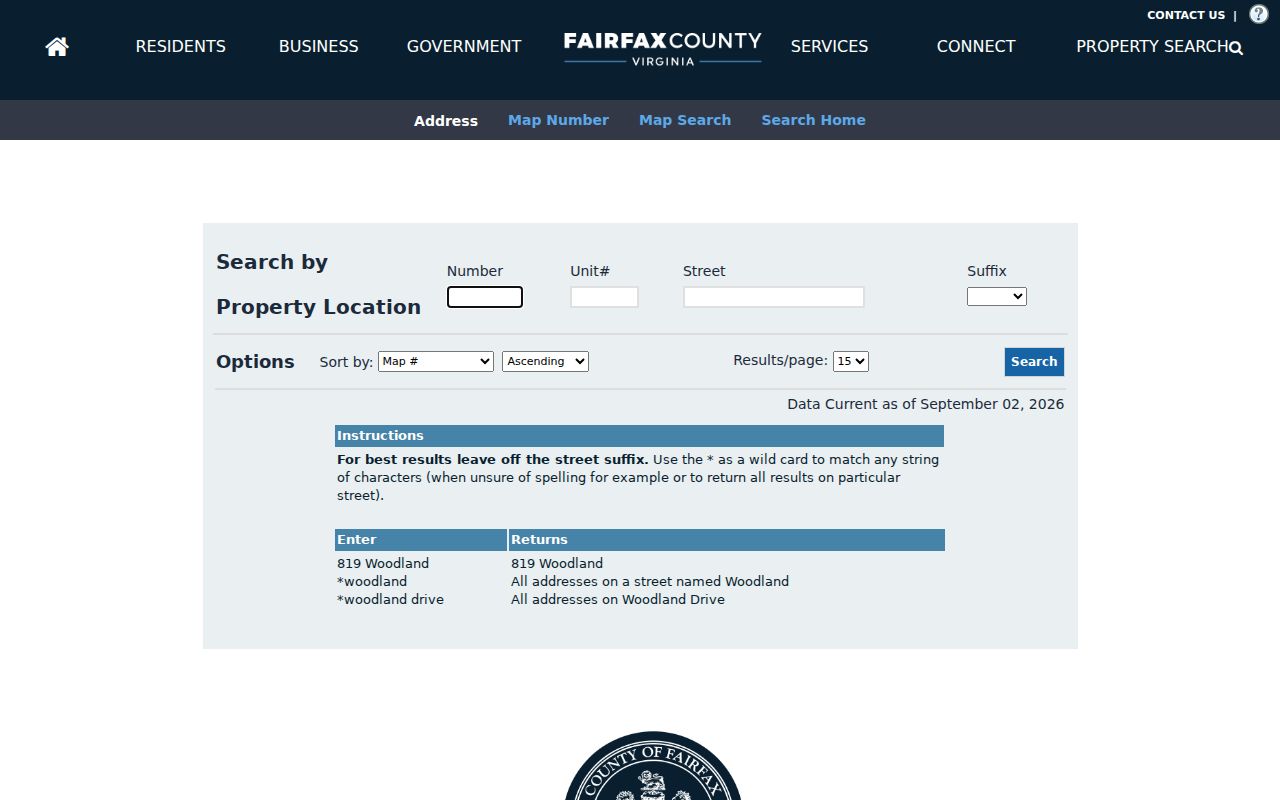
Its separate fields make it easier to test a full Centreville address before widening a Centreville query to the Centreville street name.
Centreville Street Directory Record Coverage
No single Centreville record set identifies everyone along a road. The records below are keyed to an address, parcel, document party, project, or statutory voter process. Their strength comes from agreement between independent records, not from a match in one screen. A tax assessment connects a Centreville parcel to an owner. A deed connects a transfer to legal language. A map shows geometry and nearby parcels. A historical directory may supply a dated occupant or subscriber lead.
| Centreville address record | Custodian | Useful result | Access path |
|---|---|---|---|
| Centreville iCare property assessment | Fairfax DTA | Owner, mailing and situs addresses, parcel, land and improvement context | Free web search; DTA phone, fax, mail, or office fallback |
| Centreville Jade, MAR, and GIS | Fairfax GIS | Validated site address, parcel geometry, districts, layers, imagery, adjacent lots | Free map tools and MAR exports |
| Centreville recorded deed or plat | Fairfax Circuit Court | Grantor, grantee, recording date, legal description, prior reference, image where available | Public terminal or HRC; remote CPAN subscription; counter copy route |
| Centreville historic tax books | Historic Records Center | Owner or taxpayer and assessment context | Onsite reference, 1851 through 1980 |
| Centreville PLUS or code file | Fairfax land development or Code Compliance | Addressed project, case, applicant or contractor role, and dates | Public portal or narrow VFOIA request, subject to redaction |
| Centreville voter material | Virginia Department of Elections | Personal status or restricted statutory list fields, never ballot choices | Individual portal for one’s own record; qualified list or inspection access by statute |
Centreville parcel data is the connective tissue. A Centreville road can have units, shared driveways, a condominium, or several addresses on one parcel. Record the Centreville tax-map reference before leaving a screen. It helps locate the correct legal description, plat, and deed when an old record does not use a modern Centreville street number.
Map a Centreville Street in Jade
Fairfax GIS Jade and its map applications let a Centreville researcher center an address, identify a parcel, and choose among more than 170 layers. For a short segment, turn on parcels and roads first. Add ZIP or administrative boundaries, zoning, flood or stormwater, school, voting, or district layers only when they answer a real Centreville question. The identify tool can open a parcel detail or property report where available. Measure tools provide context, not a legal boundary.
MAR is the county’s authoritative site-address repository. Use its address and parcel filters to validate the Centreville site before mapping it. Jade can browse current and historic Centreville imagery back to 1937, while the Digital Map Viewer has Centreville property-map books annually back to 1960. Those images can date a road, structure, or subdivision change, but they do not identify a resident.
The Fairfax Digital Map Viewer provides a Centreville map-history route.
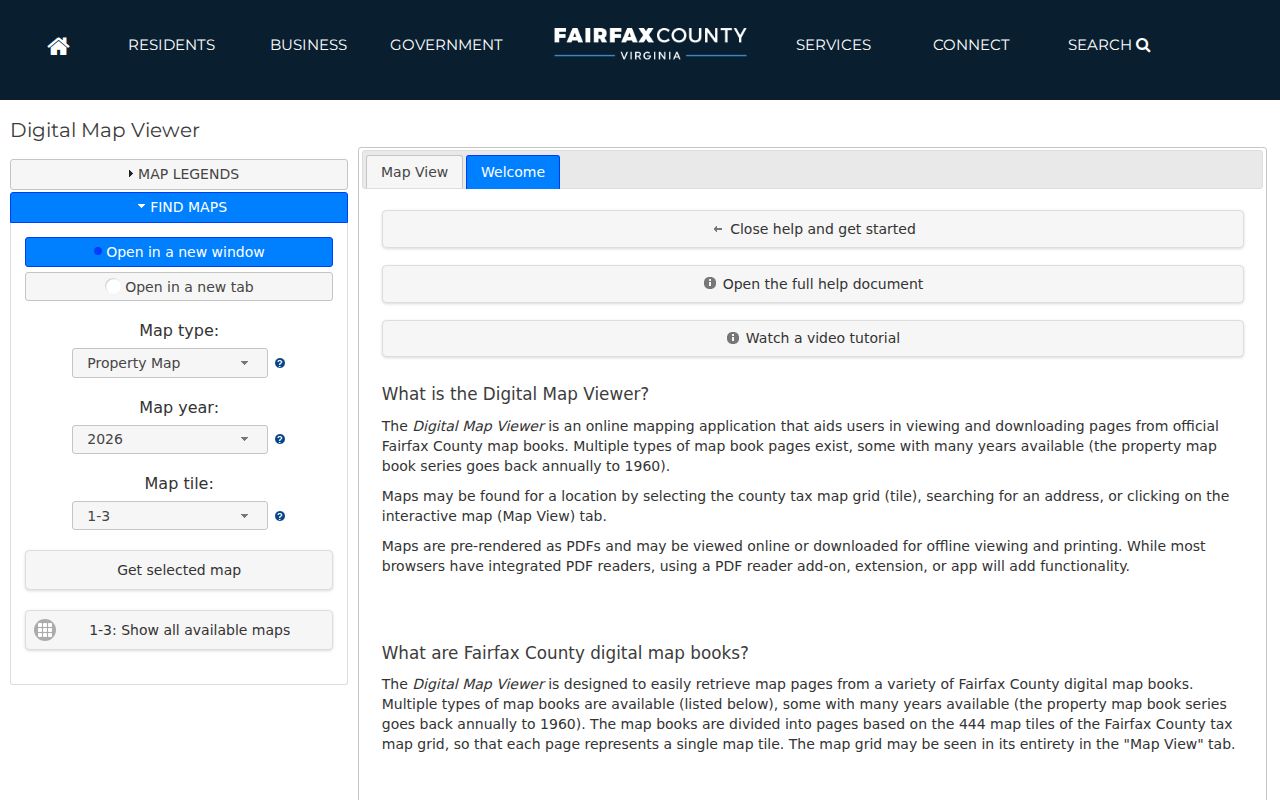
The year, tile, map-type, and address controls can help connect a modern Centreville road with a historic Centreville property-map view.
Centreville Map and Deed Differences
A parcel outline is a powerful Centreville street-records aid, but it is not the last word on a legal interest. Fairfax GIS explains that DTA manages property data while GIS draws parcel boundaries and displays much of it. Easement information is incomplete in GIS because the source mylars did not contain every easement. New easement data is also divided among GIS and land-development layers. When an easement, boundary, or ownership detail matters, return to the recorded instrument.
- Parcel
- A tax-map unit of land used to organize Centreville assessment and mapping data. It may hold one address, several units, or more than one site address.
- Situs address
- The physical location of the parcel. It differs from an owner mailing address and does not by itself prove who is present there.
- Plat
- A recorded map that can show a subdivision, lot, block, road, easement, or re-subdivision relationship.
- Criss-cross directory
- An address-first directory, usually arranged by street and house number, that can provide a dated subscriber or occupant clue.
For a Centreville parcel with an uncertain street hit, compare the Centreville tax-map number, plat, subdivision, lot or block, old owner, and adjacent tract. The Centreville legal description is often more durable than the street text. Note: A mapped result is best treated as a pointer to the Centreville deed or plat, not as a replacement for either record.
Follow a Centreville Parcel to a Deed
The Fairfax Circuit Court land-record trail is grantor-and-grantee based, not a simple Centreville address-history list. Begin with the current iCare owner, look for that owner as a grantee, and use the property’s legal description, instrument number, recording date, or recent deed reference to isolate the acquisition document. Read the image when possible. Fairfax deeds may include an “and being” clause with a prior book and page, a stronger backward bridge than a current address line.
Search the seller from that deed as an earlier grantee, then repeat. A Centreville title can pass through a trust, estate, corporation, marriage, or name variation, so use every legal name form. Remote CPAN is subscriber access, while the public courthouse terminals and Historic Records Center are the in-person paths. Land records run from 1742 to the present; HRC originals cover 1742 through 1942, with online deed-index PDFs for 1742 through 1866 and physical indexes for 1866 through 1942. Certified copies cost $2 per document plus $0.50 per page.
The Centreville CPAN land-record route is shown below.
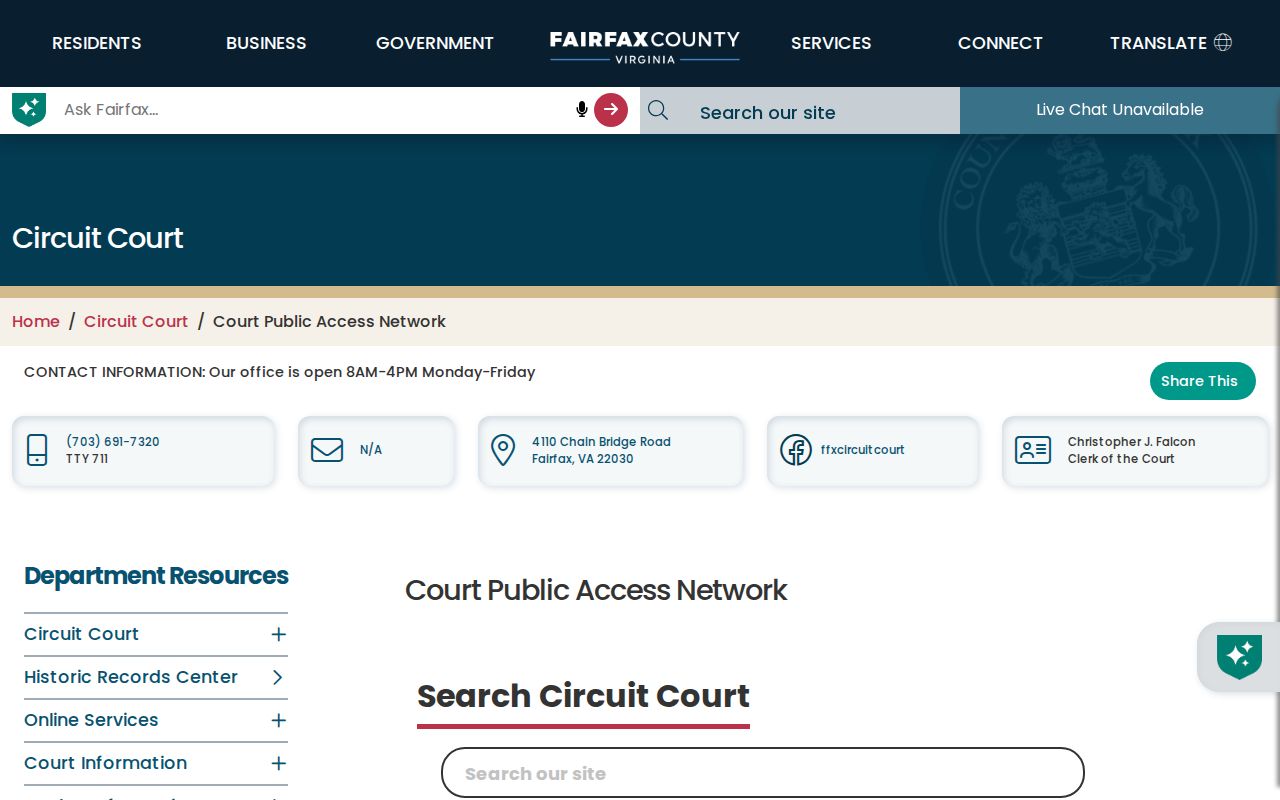
CPAN, the Research Room, and HRC are complementary Centreville access channels for a Centreville deed trail, not interchangeable copies of the same screen.
Fairfax’s deep deed run is also a local records story. Early books can include personal-property bills of sale, manumissions, apprenticeship indentures, powers of attorney, and public-office bonds alongside land transfers. Sensitive historical material deserves context and restraint. For a whole Centreville road, first select only the parcels that matter, then pursue a chain for each one.
Centreville Deed Research at the Counter
When a remote Centreville search ends at a subscription boundary or an older index, use the Fairfax Circuit Court Land Records Research Room. Public terminals support land-record research, and staff can explain the system without performing extended title research. The room is open weekdays from 8:00 a.m. to 4:30 p.m. HRC preserves original deed books through 1942 and has the physical 1866 through 1942 deed indexes. The HRC also has real-estate tax books from 1851 through 1980, a useful annual owner or taxpayer bridge when a Centreville directory skips a year.
The Land Records Research Room is the Centreville fallback for public-terminal searching and copy requests.
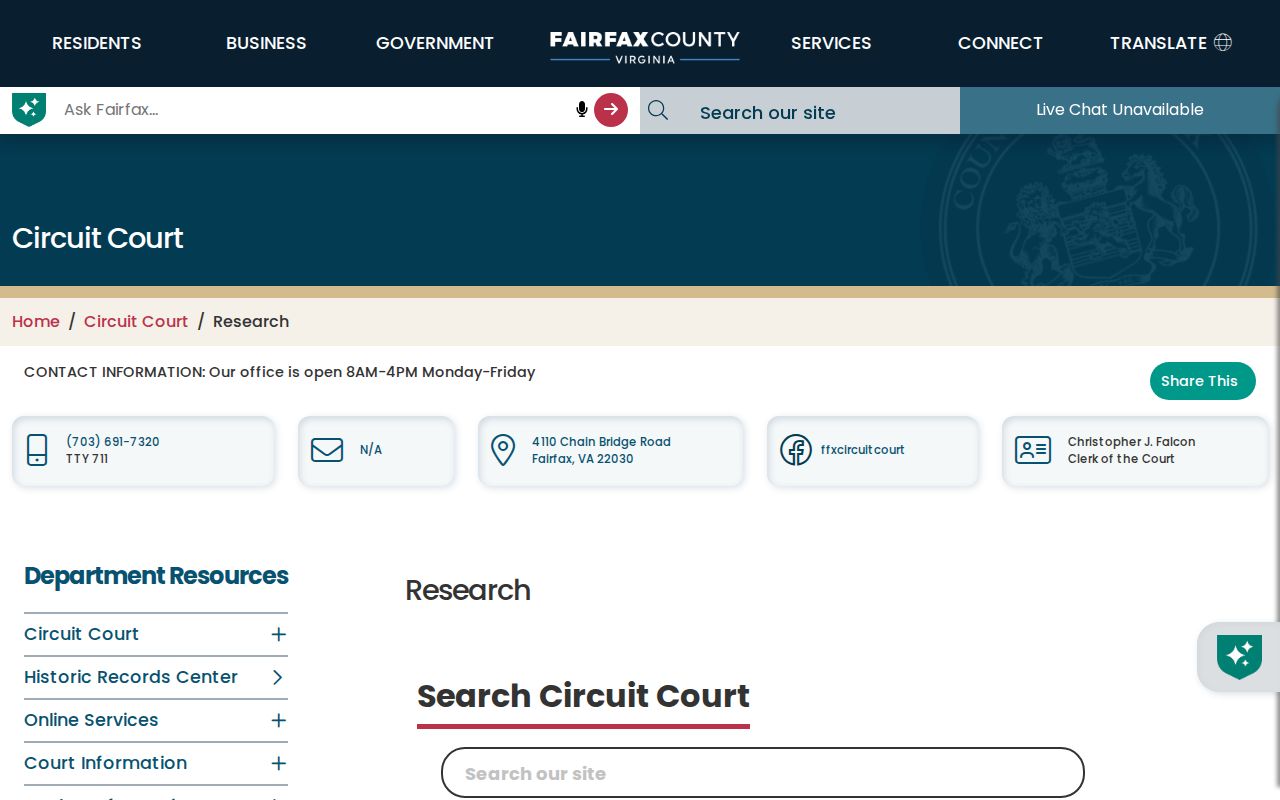
Bring the Centreville instrument number, book and page, tax map, or legal description so the counter visit begins with a narrow request.
Note: Centreville searches move faster at the counter when the request identifies one document, parcel, or book-and-page reference.
Centreville Street Permit Clues
Fairfax LDS PLUS adds a modern, address-keyed Centreville layer. It can be searched by site address, parcel, record number or type, project name, contractor, business name, license number, and date. A result may identify an applicant, contractor, architect, owner or developer, plus project status and review or inspection dates. These roles are not the same as owner or occupant. Use a Centreville permit to date work or connect a project to a parcel, then confirm a transfer in the land records.
Code Compliance files can also be tied to a Centreville address, service request, or case number. A narrow Virginia Freedom of Information Act request should include the complete address, tax map, case or service-request number, and a focused description. Privacy, investigative, and personal-information redactions can apply. The county did not expose a complete live PLUS result inventory during research, so verify the actual Centreville record fields before relying on them.
Note: A Centreville project participant can differ from the deed party, so save the stated role and the record date.
Centreville Street Voter Boundaries
The Virginia Citizen Portal is for a person to check that person’s own registration using name, date of birth, last four digits of the Social Security number, and locality. It is not a public Centreville street browser. Street-level voter material follows statutory access rules. Public inspection and list access are governed principally by Virginia Code §§ 24.2-405, 24.2-406, and 24.2-444, while qualified list products have requester categories and purpose limits. A locality, district, or election filter is not a free public household list.
Protected-voter residences, personal identity numbers, full birth information, and ballot choices remain protected. Voter history may show participation, not how someone voted. A Centreville no-match can reflect a spelling, locality, address, status, protected-record, or system-delay issue. It cannot establish that a person is not registered.
Past Names on a Centreville Street
For an older Centreville road, ask the Virginia Room for a reverse or criss-cross directory with an address-first section. Start at the street, read house numbers in sequence, then use the name-first section to check a spouse notation, occupation, or other address clue printed in that volume. Request the directory type, locality or state, and exact year. The Library of Congress describes this address-first method for reverse directories, but the confirmed public Fairfax sources do not supply a complete Centreville directory run.
The 1963 Hill’s Fairfax City directory is only a Fairfax-adjacent lead. Fairfax City is separate from Centreville, so do not assume it covers a Centreville address without inspecting the volume. The Virginia Room’s local-history shelves, microform readers, and CPAN station are the relevant Centreville fallback. The historical collections themselves have a narrower treatment on the Centreville city directory page.
Note: A Centreville directory entry is a dated lead that still needs a parcel, deed, census, or other independent confirmation.
Centreville Street Labels Need Care
Centreville addresses sit within Fairfax County, but postal labels and geographic boundaries can point in different directions. The Centreville CDP intersects five Census ZIP Code Tabulation Areas: 20120, 20121, 20124, 20151, and 22030. A postal city label can say Centreville, Chantilly, or Fairfax without creating a separate municipal records office. Verify the delivery label with USPS, then use MAR, parcel data, and the deed’s legal description to establish the Centreville or Fairfax County context.
No official source inspected documented a dated Centreville street-renumbering project or renamed-street list. A failed number search is a reason to try former road names, route numbers, a subdivision lot or block, adjacent owners, the tax map, historic aerials, and property-map books. No Centreville, Fairfax County Sanborn run or county property-fraud alert enrollment was verified in the official source review. The Fairfax property-history guide links deeds, tax records, maps, directories, and local-history materials for that work.
The official Centreville property-history guide is shown here as a route between those record types.
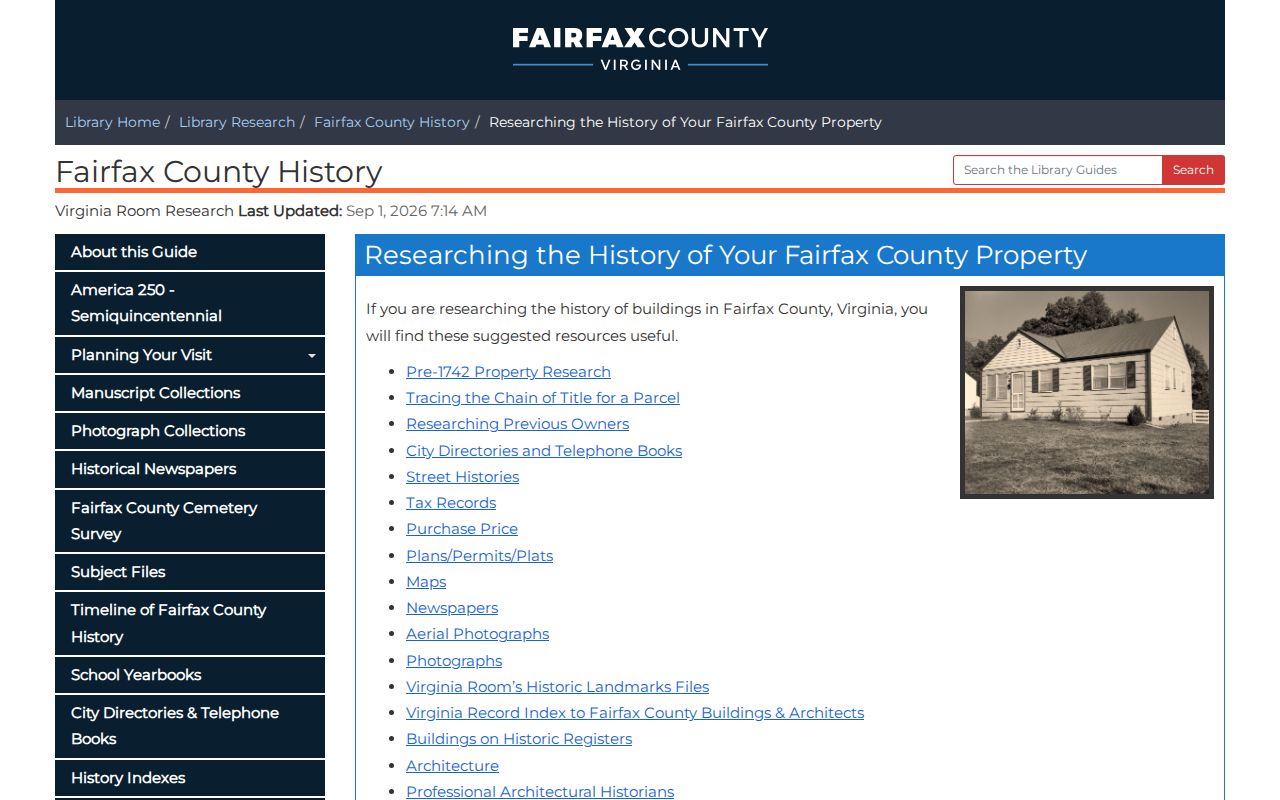
It reinforces why a Centreville street number is only one entry point into a Centreville parcel’s older record trail.
What a Centreville Street Directory Cannot Show
A public Centreville property roll does not list every person at a parcel. A deed names title parties, and a permit can name a project participant, but neither is a roster of household members or visitors. DMV address data is privileged under the Driver’s Privacy Protection Act and Virginia Code §§ 46.2-208 through 46.2-214. Utility customer lists and private delivery records are not general public records. A school-zone result marks a boundary, not a household.
Keep any Centreville result in its time and role. A court, permit, cemetery, or name record may be historical, role-specific, confidential, or redacted. Confirm the custodian before relying on it or contacting anyone.
Lawful use. Centreville street and address records support personal research, family history, property curiosity, and civic understanding. Never use a record to stalk, harass, intimidate, or harm another person.