
Centreville Block Sources for Neighbors
A Centreville block is best examined in layers. Fairfax GIS supplies Centreville parcel geometry and address context; the assessment roll adds owner and tax-map details; land records establish a Centreville ownership transfer only when the deed supports it. My Neighborhood can connect an address with public services and precinct information. Historical address-first directories may identify a past subscriber, while association material usually offers a public contact rather than a household list. Centreville is a Fairfax County CDP, so county sources are the correct starting point.
| Source | What It Shows About a Block | Access |
|---|---|---|
| Jade parcel map | Centreville parcel polygons, roads, adjacent lots, map layers, current and historic imagery, and reports where enabled | Free Fairfax GIS web viewer |
| Master Address Repository | Valid Centreville site addresses, street names, parcel relationships, filters, and selected-result exports | Free Fairfax GIS application |
| My Neighborhood | Centreville address-centered precinct, officials, school assignment, and nearby public facilities | Free address or map-click report |
| Fairfax iCare | Owner, mailing and situs address, tax map, improvements, assessment, and sales context for a Centreville parcel | Free public search; online owner-name display may be withheld |
| Deed records, CPAN, and HRC | Centreville transfers, legal descriptions, plats, easements, and historic ownership clues | Public terminal or HRC; CPAN remote subscriber access |
| Virginia voter information | Statutory inspection or qualified list products for a Centreville area, not an unrestricted household list | Request and use are limited by Virginia law |
| Community associations | Public contact, joining details, and Centreville neighborhood identity when voluntarily posted | County association resources and organization contacts |
None of these layers identifies every person at a Centreville address. A Centreville property result reports a recorded or tax-roll owner, and its mailing address may be elsewhere. A map outlines a parcel, not a household relationship. Use the result's role, date, and custodian before drawing a conclusion about anyone nearby.
Map a Centreville Block Around You
Use a Centreville one-address process so the records stay tied to a real parcel rather than a vague radius. Start in Jade or My Neighborhood, then validate the Centreville site in MAR. Zoom to the Centreville street segment, enable parcel boundaries and labels, and select adjacent polygons one at a time. Capture an address, tax-map identifier, and direction of the adjoining parcel. The Centreville map pop-up is a locator, not the legal source for a boundary, easement, or transfer.
- Enter the Centreville target address in Jade or use the My Neighborhood map-click option, then confirm the official site address and parcel in MAR.
- Turn on Centreville parcel boundaries and labels. Click the surrounding polygons and record each selected parcel's address, tax-map identifier, and road relationship.
- Use iCare for the selected Centreville parcel's owner of record, mailing and situs fields, plus the assessment and sales context. Keep mailing and situs as separate fields.
- For a wider segment, use MAR address or parcel filters and export the selected results, then reconcile them with iCare rather than treating the export as ownership proof.
- Open the deed index only when a Centreville historical ownership question calls for it. Use the legal description, plat, or prior reference to test the link.
Adjacent Centreville parcels can be separate tax lots, part of a condominium arrangement, or tied to a common subdivision. Adjacency does not mean shared ownership or a household connection. When the question extends along an entire named road, the Centreville street directory follows the fuller address-keyed chain.
Centreville Parcels for Neighbors
The Fairfax GIS and Mapping Services route leads to Jade and the Master Address Repository. Jade offers more than 170 layers, including parcels, roads, zoning, flood and stormwater information, boundaries, districts, schools, facilities, aerial imagery, and transportation. MAR supplies Centreville address and parcel filters with export tools. For Centreville, use the layer list to explain why adjoining parcels may share a road yet fall in different ZIP, district, or service areas.
Use the Fairfax GIS/Jade source before inspecting the parcel layer.
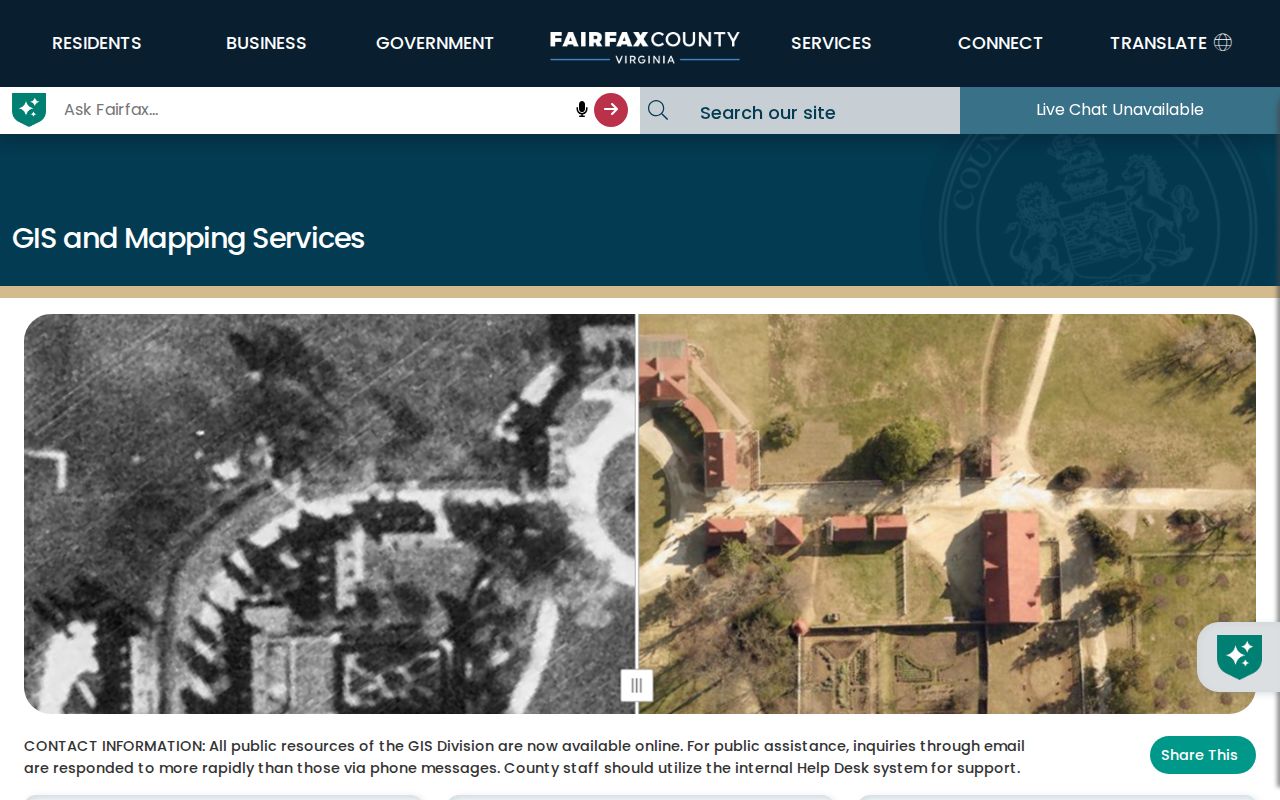
The Jade parcel view supports a Centreville block comparison, while the recorded deed remains the authority for a legal transfer or easement.
Measure and draw tools can supply distance or block context. They are not a boundary survey. Historic imagery reaches back to 1937, but a building visible in an image does not identify an occupant.
Centreville Layers Around a Block
Use only the layers that answer the Centreville question at hand. Centreville parcel and road layers show the physical arrangement. ZIP and administrative-boundary layers show why a familiar postal label may not match the Centreville CDP. Zoning, flood or stormwater layers can explain public land-use context. Voting and district layers help distinguish a precinct assignment from a personal voting record. My Neighborhood adds elected officials, public facilities, libraries, parks, and school assignment from an address or map click.
These Centreville layers do not make a resident list. GIS itself warns that parcel displays are mapping aids and that deed and easement information is held in the Circuit Court record. Keep the Centreville source date with any saved image or export, since a map layer and the DTA property file are maintained through related but distinct county functions.
Centreville Owner Records Nearby
Fairfax iCare is the county's address-keyed assessment source for Centreville parcel work. It can search by address, owner name, or tax-map number and can return the parcel's owner, mailing and situs address, land description, improvements, assessment, sales, and tax context. On a Centreville block, the tax-map number is a more stable Centreville bridge than a street label when units, shared drives, or subdivisions complicate the address.
Owner of record is not the same as a current Centreville occupant. The situs is the physical parcel. The mailing address is where tax correspondence goes and may be a business, trust, post office box, or another place. Fairfax also notes that online name withholding can alter the iCare display without making the underlying information vanish from county request channels.
Centreville Voter Rules Near a Block
The Virginia Citizen Portal is for a person's own registration lookup. Its current instructions use first name, last name, date of birth, the last four digits of the SSN, and locality. For a Centreville entry, the locality is Fairfax County. It is not a public Centreville street-browse tool, and no one should enter another person's identity information to try to build a block list.
Virginia law separates general public inspection from qualified voter-list products. The Centreville request route offers geographic and election filters, but the requester must certify a statutory category and a lawful purpose. Public material for Centreville requests excludes SSN, driver-license data, full birthday or birth month, protected residences, and ballot choices. Participation history can show that a person took part in an election; it does not show how that person voted.
Centreville Voter No-Match Context
A Centreville voter-portal no-match is not a verdict on registration. It can reflect a spelling difference, the wrong locality, an address change, inactive or cancelled status, a protected record, or a system delay. Centreville users select Fairfax County, not a separate Centreville locality. The portal is for a person's own record, so it cannot be used to test people around an address. For a question about an individual record or an election document, contact Fairfax Elections through the county's records route rather than guessing from a failed screen.
Centreville Community Contacts
Centreville community material can help identify a public point of contact, a meeting, or a neighborhood name. It should not be used to infer membership. Fairfax County's neighborhood topic area links to HOA and community-association resources and My Neighborhood. The county list is broad, not a definitive Centreville boundary map or a promise that every listed Centreville group remains active. Check an association's own current contact and covenants before connecting it to a specific block.
| Historic Centreville Society | Centreville preservation contact, tours, events, and The Millrace history newsletter; it does not publish a resident or member roster. |
|---|---|
| Fairfax County neighborhood resources | County route to Centreville HOA and community-association information, plus address-centered My Neighborhood tools. |
| Association's own contact | Use a Centreville association's current public contact or covenant page to confirm the area and contact method. Do not treat a name in a county list as a membership record. |
Open the Fairfax County neighborhood resources for the county's public association route.
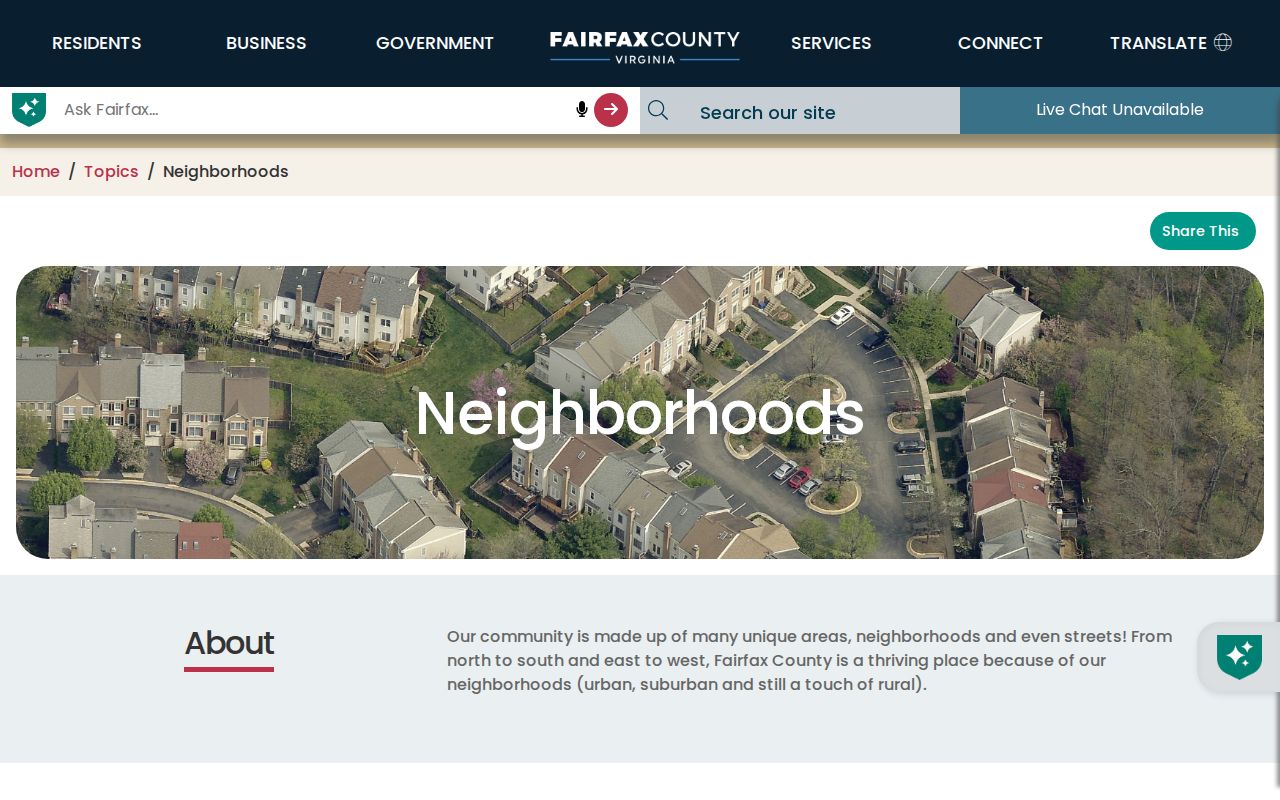
The county page is a way to locate public community contacts, not a directory of private households on a Centreville block.
Centreville Historic Block Clues
For a past Centreville block, ask the Virginia Room for an address-first directory, telephone book, newspaper reel, map, or yearbook by exact locality and year. A criss-cross directory puts street and house number before a subscriber or occupant, making it useful when a Centreville surname is unknown. Exact Fairfax/Centreville directory runs are not published in the available public description, so a librarian should confirm the year before a conclusion is drawn.
Historic records may use Newgate, a route, a farm, a subdivision, a tract, or an adjacent landowner instead of the present Centreville address. HRC tax books for Centreville research cover 1851-1980, historic aerial imagery reaches 1937, and Fairfax Digital Map Viewer property-map books reach annually to 1960. These Centreville sources establish place context and sequence, not a comprehensive record of everyone present at a given time.
Compare Centreville Neighbor Tools
Official sources and commercial neighbor-lookup tools serve different purposes. A Centreville county map or property roll identifies its custodian and record type, while a commercial product may merge public-record extracts with marketing, address, or phone data. That merged result can lag behind a move, join unrelated people, omit protected records, or lack a document image. For a Centreville history question, retain the official source and its date rather than relying on an unverified compilation.
| Source type | Strength | Limit |
|---|---|---|
| Official Centreville GIS, iCare, deed, or community source | Named custodian, defined record role, and a route to confirm the underlying record | May be incomplete, dated, role-specific, or restricted |
| Commercial neighbor-lookup category | May offer a quick Centreville collection of clues | Can conflate people, lag behind changes, omit protected records, and lacks custodian certification |
Centreville Privacy Limits for Neighbors
Private household details remain outside a Centreville block search. A Centreville parcel record does not enumerate every household member or visitor. DMV address data is privileged, utility and delivery records are not public rolls, and a school-zone result is a boundary, not a family record. Protected voters and Address Confidentiality Program participants can use protected mailing arrangements in public voter-list contexts while their full residence is used internally for precinct assignment.
Virginia's Address Confidentiality Program is administered through the Attorney General under Va. Code § 2.2-515.2. Public voter records also exclude protected addresses and key identity fields. If an iCare result appears incomplete, that may reflect online name withholding. Do not try to defeat a protection by comparing surrounding records, repeating contact, or publishing sensitive details. Correct an official record through its custodian.
Lawful use. Use Centreville block records for personal, historical, civic, or safety research. Repeated unwanted contact, intimidation, or attempts to expose protected details can violate Virginia law, including Va. Code § 18.2-60.3.
Note: A public match can be stale or belong to another person, so confirm the role, date, and record custodian before relying on it.