
Centreville Resident Lookup Record Coverage
A Centreville resident lookup is a comparison process, not a single roster. Fairfax County keeps Centreville property, court, probate, and land records, while Virginia agencies control Centreville voter, vital, license, business, and unclaimed-property systems. Each source describes a different role. An owner is not automatically an occupant, a court party is not proof of a current address, and a business filing can list an office or agent. Start with the source that fits the question, then seek a second independent anchor.
| Record | What It Confirms | Where | Access |
|---|---|---|---|
| iCare property roll | Centreville tax owner, situs, mailing address, parcel, assessment, and sales context | Fairfax iCare for Centreville | Free web, phone, fax, or mail; online owner-name withholding can apply |
| Voter status | A Centreville person’s own registration status, precinct, and districts | Virginia Citizen Portal for Centreville | Personal authenticated lookup; public list access is limited by statute |
| Circuit case index | Centreville party role, case type, filing/status, hearings, and docket activity | Fairfax eCaseSearch for Centreville | Free non-confidential index from October 18, 2004; no images |
| General District OCIS | Centreville party, case number, hearing, division, service/process, and reports when entered | Virginia GDC system, with Fairfax County selected for Centreville | Public categories only; protected, juvenile, and mental-health matters are excluded |
| Deed and probate records | Centreville recorded transfer, legal description, fiduciary, executor, heir, and estate clues | Fairfax Circuit Court, CPAN, and Fairfax Historic Records Center routes for Centreville research | Public terminal and HRC routes; remote CPAN images are subscriber access |
| Vital record | Centreville birth, death, marriage, or divorce event and eligible certificate route | Virginia Department of Health route for Centreville events | Public after the statutory opening period; current form fee is $15 |
| SCC, DPOR, or unclaimed property | Centreville filing connection, license status, or a claim lead | Centreville-related state registries and Virginia Treasury | Access and proof rules differ by custodian |
When a Centreville address is known, iCare can tie a parcel to a tax owner and its situs. When only a name is known, normalize it first, including middle initial, suffix, former surname, spelling variants, and entity variation. The court index and state registries can then supply dated leads. Do not infer a personal address from an SCC or DPOR filing, and do not turn a Centreville property record into a list of everyone at that location.
Centreville iCare Record Clues
Fairfax iCare searches Centreville addresses by address, owner name, or tax map number. Its address form separates number, unit, street, and suffix, and its wildcard can return addresses along a named street. The resulting parcel information can include the physical situs, tax owner, owner mailing address, land description, improvements, assessment, and sales context. It is useful for anchoring a Centreville record trail, but it does not establish who currently lives at a parcel.
The Fairfax iCare address search shows the street-oriented starting point used for a Centreville resident lookup.
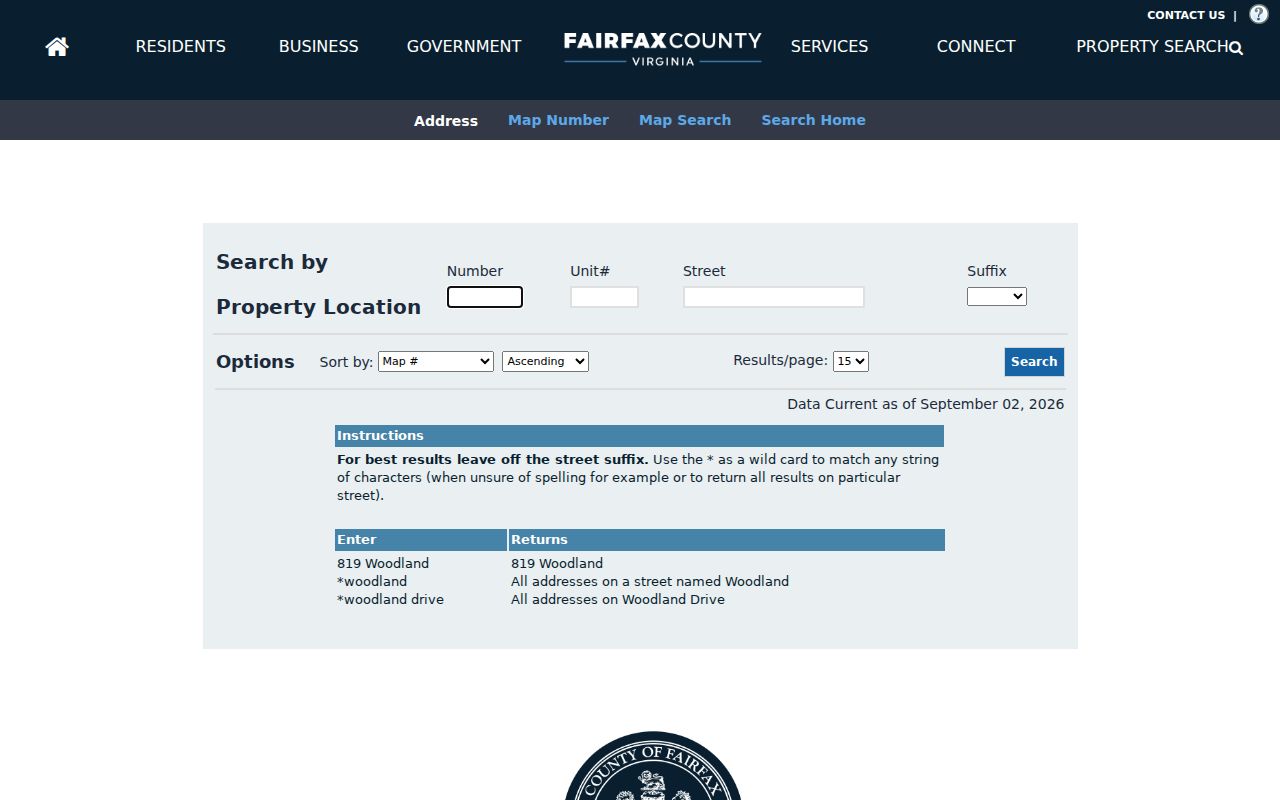
A mailing line shows where tax correspondence goes. The situs identifies the Centreville parcel. Those two fields may differ, so neither should be treated as a private current-location claim without another lawful, independent record. Owner-name withholding can affect the online display. If a Centreville property result is incomplete, use the published phone, fax, or mail route to ask DTA about its property-record process rather than treating an empty online field as a final answer.
Note: Centreville assessment values are annual tax-administration context, while the recorded deed remains the legal transfer record.
Centreville Voter Record Limits
The Virginia Citizen Portal is for a person’s own Centreville status check. The current instructions use first name, last name, date of birth, last four digits of Social Security number, locality, and a certification step. For Centreville, the locality is Fairfax County because Centreville is not a separate Virginia locality. A successful personal check can display Centreville registration status, precinct, polling location, districts, and related status information.
The official voter-status form illustrates why a Centreville search is not an open name-only resident search.
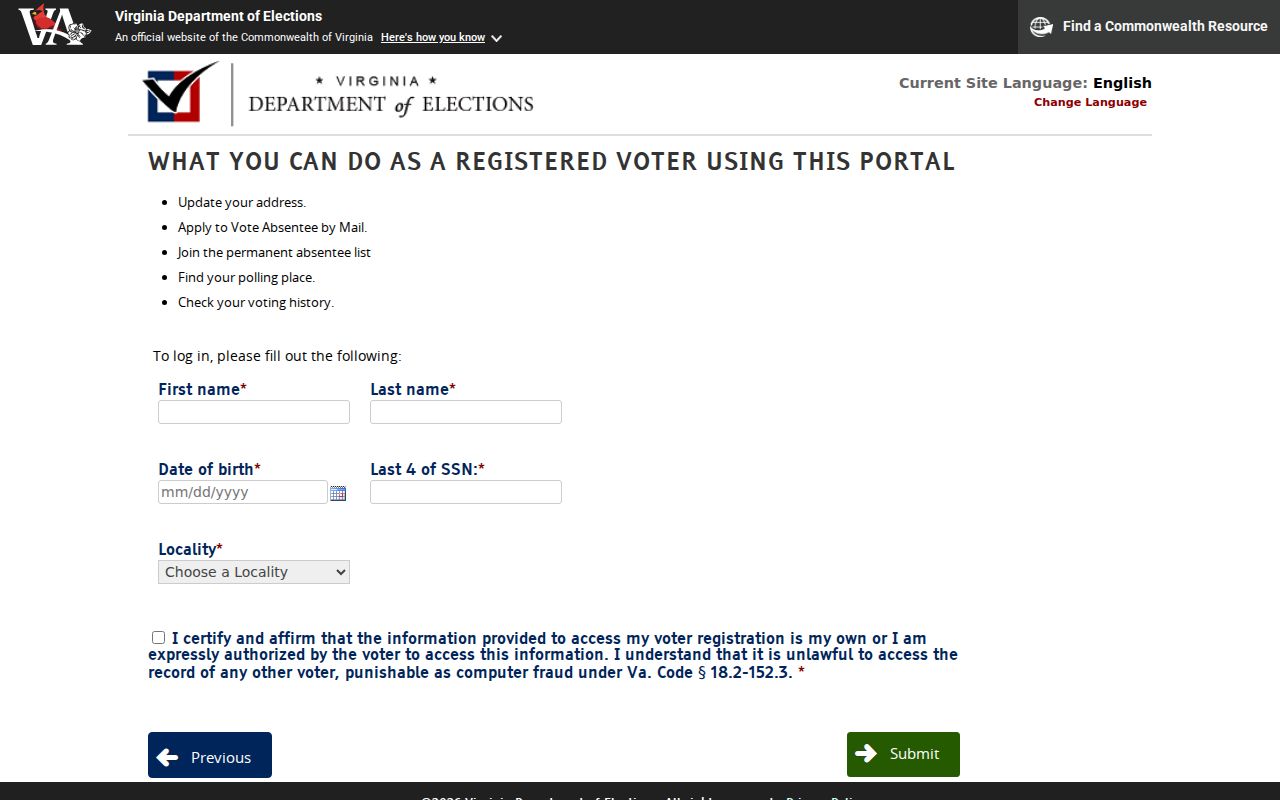
Centreville public voter information has important limits. Protected voters can use a permitted mailing address in public-list contexts, and public records generally exclude protected residence addresses and core identity fields. Participation history does not disclose ballot choices. A no-match can reflect a spelling issue, status change, protection, or delay, not a conclusion about a person.
Centreville Resident Lookup at eCaseSearch
Fairfax Circuit Court’s free eCaseSearch is a focused Centreville same-name check. Select Civil or Criminal, then choose name or case number. Name mode requires at least the first two letters of a surname or business name, and a first name can refine a common result. Search results stop at the first 100 matches, so use both name fields, case type, dates, locality, party role, and a known case number whenever possible.
The Fairfax eCaseSearch portal is the free Centreville index route for non-confidential Circuit cases beginning October 18, 2004.
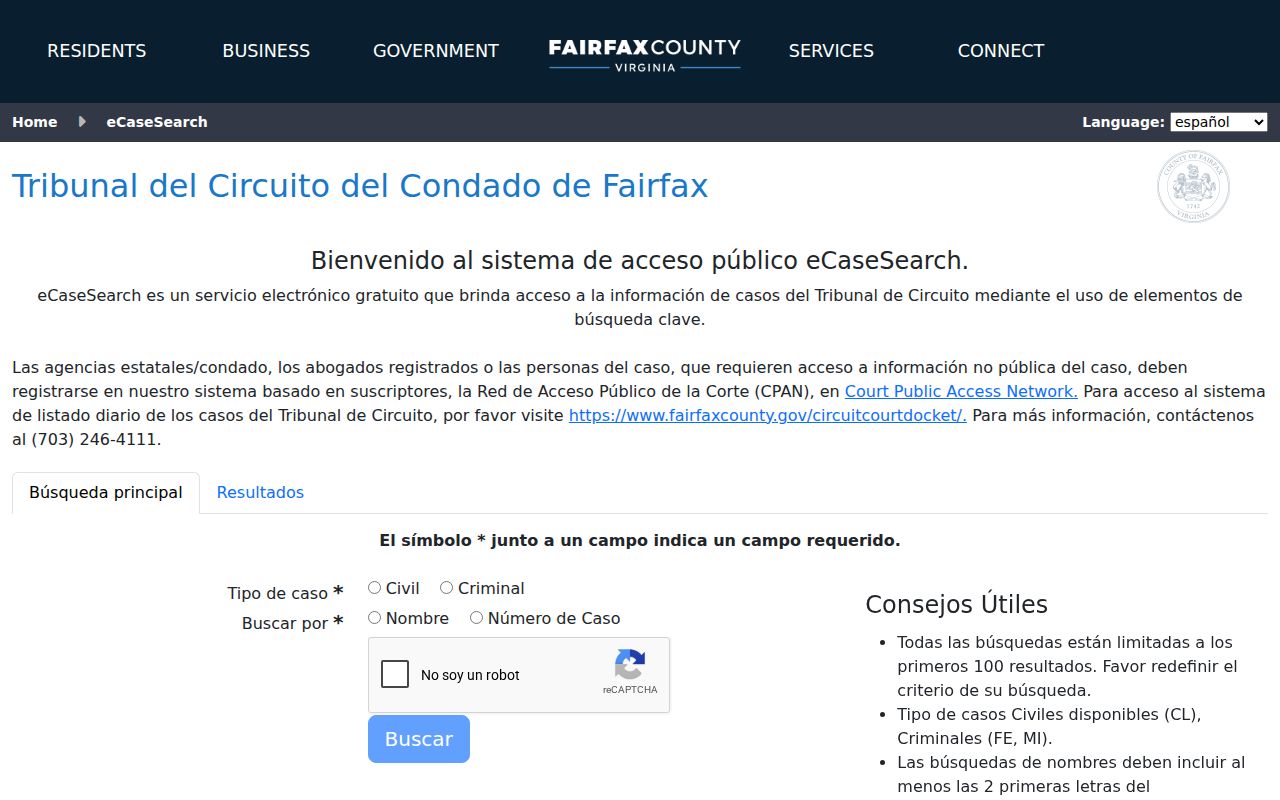
A Centreville result can show the case number, type, filing date, status, parties, hearing information, and docket activity. It does not supply document images. For Centreville General District Court material, use the Virginia GDC system, select Fairfax County, and search by party, case number, hearing date, or service/process name. Protected, juvenile, mental-health, and other confidential categories are not complete public results.
| eCaseSearch field | What it can show |
|---|---|
| Case type and number | Whether the Centreville indexed matter is civil, felony, or misdemeanor and its court identifier |
| Party and subtype | Listed Centreville plaintiff or defendant names, business names, and case classification |
| Filing date and status | The age of the Centreville case and its recorded status |
| Hearing and activity | Scheduled Centreville dates or register-of-actions-style docket entries when available |
| Detail link | Centreville case-information detail, not a promise of pleadings or document images |
Centreville Probate Record Paths
Centreville event records can resolve a Centreville relationship or a date, but access depends on the record and its age. Virginia birth records become public after 100 years. Death, marriage, divorce, and annulment records become public after 25 years, subject to any other restriction. Before that opening, an eligible immediate family member or legal representative generally needs identification for a certified copy. Current Virginia forms list a $15 certification or search fee.
The VDH vital-records forms identify the separate routes for Centreville birth, death, marriage, and divorce requests.
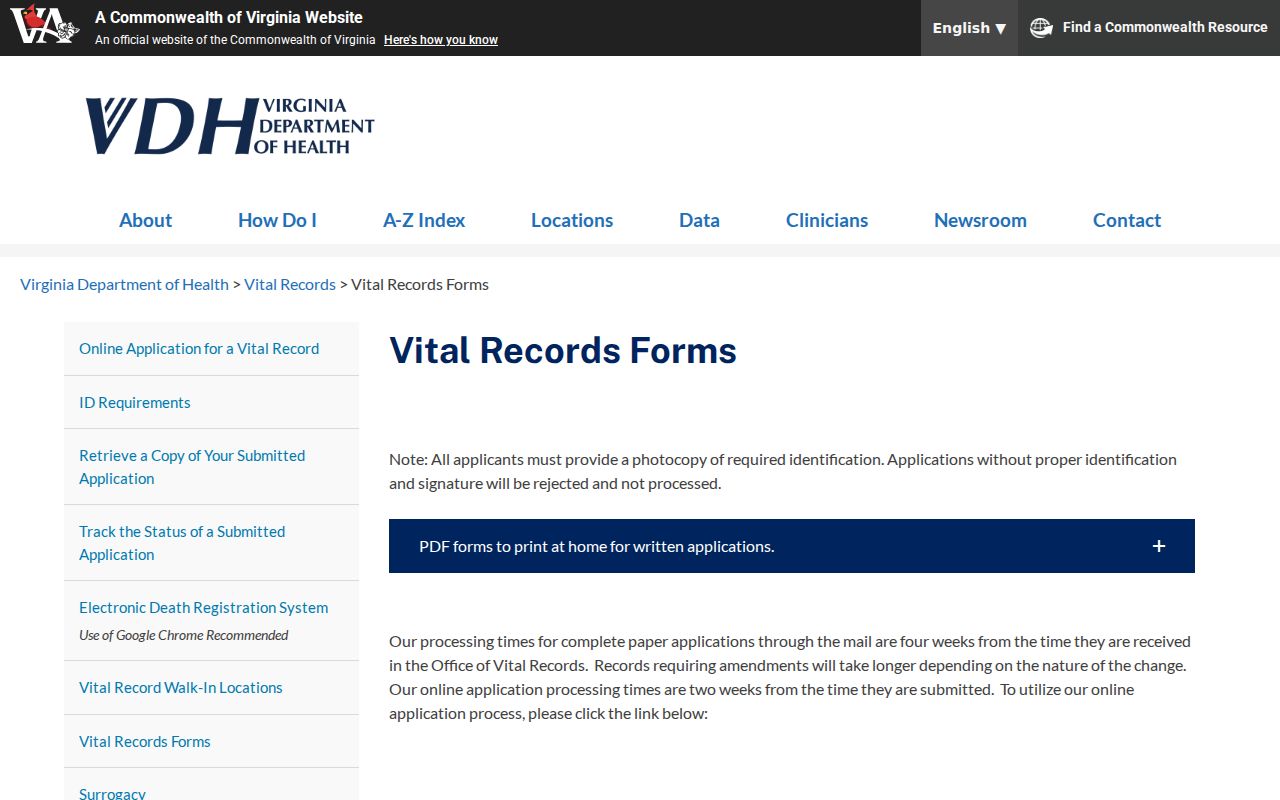
For a Centreville estate question, Fairfax Historic Records Center holds Will Books from 1742 through 1965, indexed through 1935, while CPAN carries post-1935 material. A probate record may identify an executor, fiduciary, heir, or estate property. It is historical estate evidence, not proof of a current address. A sealed adoption file is not a public search path; use VDH’s official adoption and birth-parent contact channels instead.
Verify a Centreville Resident Lookup
Verify Centreville identity through two independent anchors. A shared name alone is weak evidence, especially in Fairfax County. A better Centreville match aligns a parcel situs or mailing address with a dated deed, a court case number with the correct party role, or an eligible vital event with a documented relationship. Record the date of each source. Newer entries can supersede older ones, and an address in a historical record may no longer be current.
- Normalize the Centreville name. Try surname, first name, middle initial, suffix, former name, and close spelling variants.
- Use iCare by Centreville owner name or address. Save the situs and tax-map number separately from the mailing address.
- Check a relevant court index by name or case number, then compare filing date, case type, and party role with the property lead.
- For ownership proof, follow the recorded deed through the Land Records Research Room, CPAN, or the Historic Records Center. Request a certified copy from the custodian only when it is needed.
- Docket
- A Centreville court’s running list of filings, hearings, and actions in one case.
- Index versus image
- A Centreville index points to a record. An image is the document itself, which may require a terminal, subscription, request, or copy fee.
- Certified copy
- A Centreville copy is issued or certified by the record custodian for an official purpose; it is different from a search result.
Centreville Court Records by Numbers
Centreville access channels are deliberately uneven. eCaseSearch is free and index-only, while CPAN is a subscriber service with broader image and legacy access. Public courthouse terminals serving Centreville research, the clerk counter, and Historic Records Center books remain important when a web index ends. The free eCaseSearch launch in 2024 widened access to non-confidential Circuit cases from its October 18, 2004 start date.
That change has been heavily used for Centreville searches. Fairfax Circuit Court reported that eCaseSearch passed one million hits in its first year and averaged more than 45,000 searches each month by November 2025. Volume does not make a match certain. It makes careful narrowing more important, particularly for common names and broad case categories.
Centreville Record Names and State Leads
State-level tools can add a limited, dated lead to a Centreville resident lookup. The State Corporation Commission’s Clerk’s Information System searches Centreville-related entities by name or SCC ID. DPOR’s License Lookup accepts name, license number, address, and license type. These records can identify a filing role or credential, but an entity address may be a registered-agent or office address rather than a person’s residence.
The Virginia Treasury unclaimed-property service offers a free Click and Claim name search for a Centreville lead.
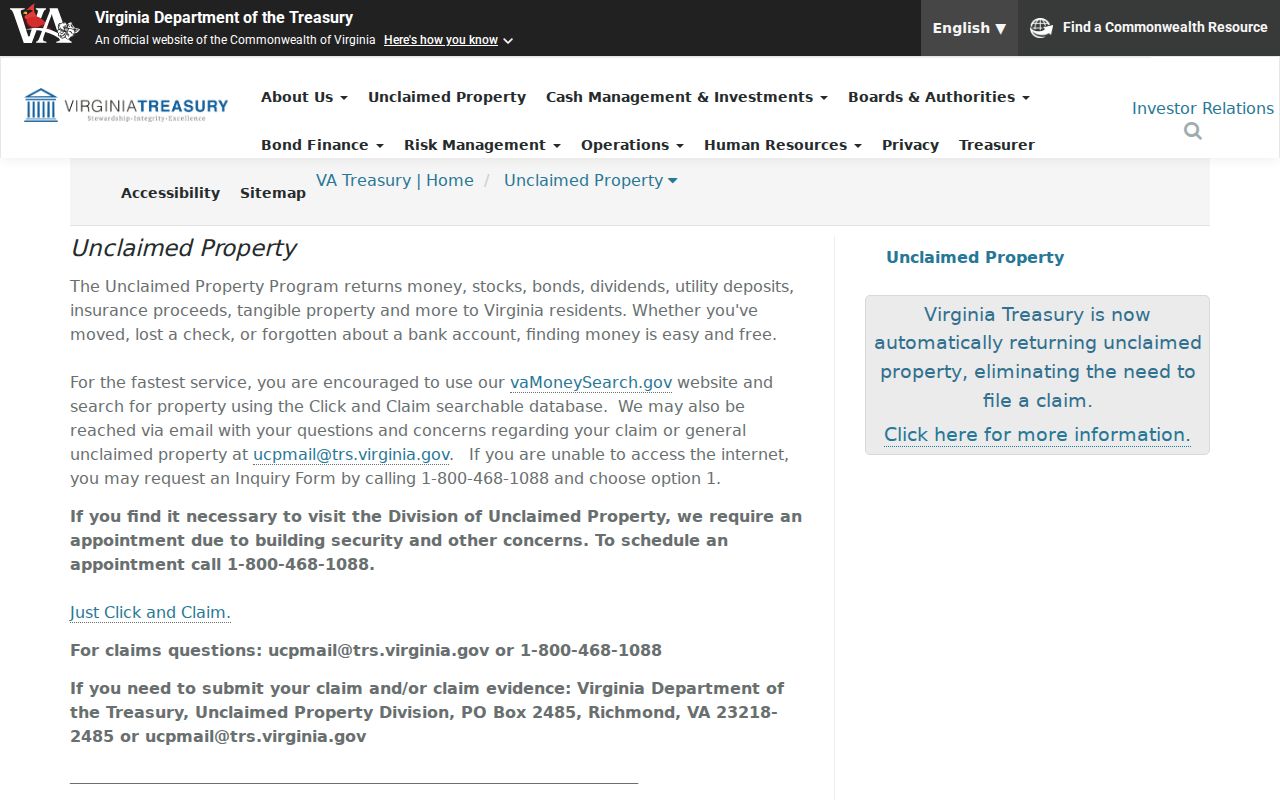
A Centreville unclaimed-property match is only a lead. The claimant must provide evidence, and a matching name is not proof of identity or residence. Use it to prompt a check of the state’s own claim process, not to make a personal conclusion.
Centreville Resident Lookup Privacy Limits
Virginia Freedom of Information Act requests can seek existing records with reasonable specificity, but VFOIA does not override a court seal, vital-record rule, protected-voter status, adoption confidentiality, or driver-record privacy. A Fairfax request goes to the office that owns the record. Ask for a named file, date range, address, case number, or record type rather than asking an agency to create a broad resident list. Under Va. Code § 2.2-3704, the agency has a statutory response process that can include production, estimate, denial with citation, or a notice of more time.
Virginia’s Address Confidentiality Program and protected-voter provisions can replace or shield a safety-protected address. Do not attempt to connect such a record to a physical location through other sources. Errors should go to the custodian: DTA for iCare, Elections for registration, VDH for vital amendments, and the Circuit Court for court or land-record issues.
For a narrow request, use the Fairfax County FOIA route for a county-held record and identify the record with care. Fairfax County is not the custodian for Circuit Court, General District Court, Sheriff, VDH, or Commonwealth’s Attorney records. A request may ask to inspect or copy an existing record, but it cannot require an office to assemble facts into a new person profile. Ask for an estimate before a costly search, and expect lawful redactions where personal, investigative, or protected information is involved.
Lawful use. Use records for personal, historical, civic, estate, or safety research. Virginia law does not permit a record trail to be used to stalk, harass, intimidate, or harm another person.